
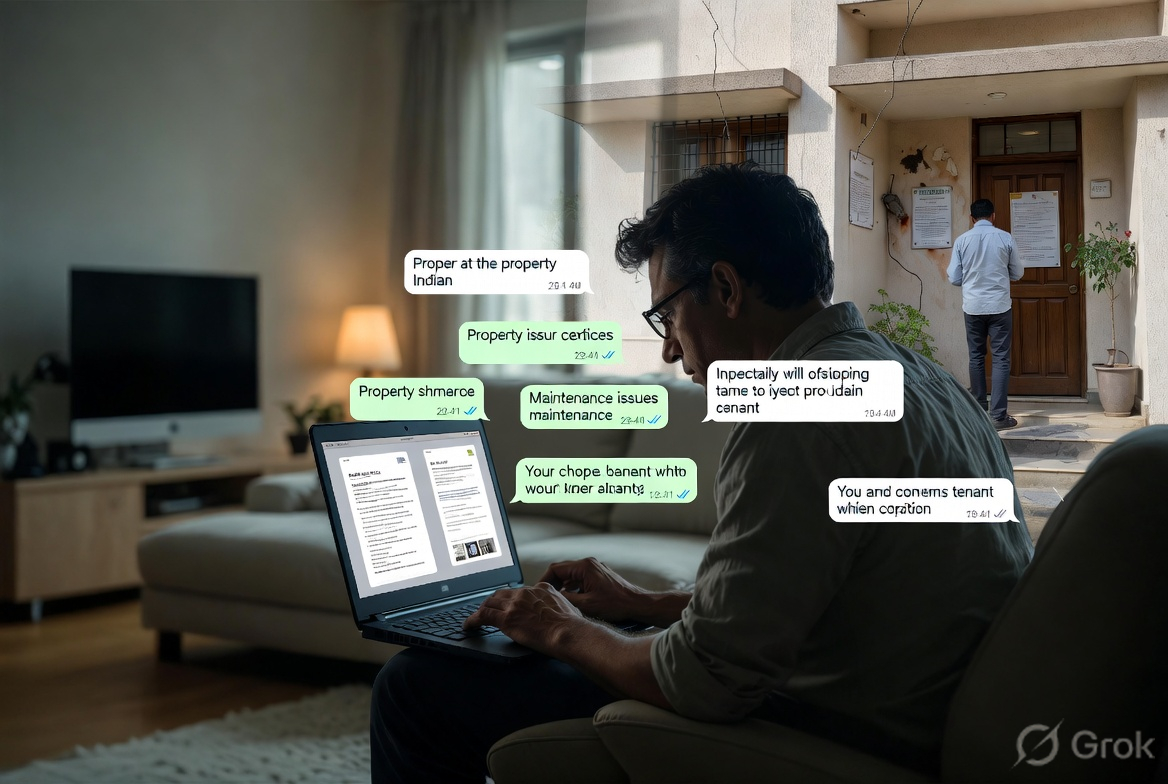
How Hard Is It for NRIs to Manage Property Remotely?
Ask any NRI who owns property in India and they will tell you the same thing. It sounds manageable until it isn’t.
The idea of owning land or a home back in India while living abroad feels straightforward on paper. You own an asset, someone looks after it, and you collect returns. In reality, the experience of trying to manage property remotely is one of the most consistently frustrating parts of being an NRI with Indian assets.
This is not meant to discourage ownership. It is meant to give you an honest picture of what remote property management actually involves, so you can plan for it properly.
The Distance Problem Is Not Just Physical
When something goes wrong with a property in India, and something always eventually does, the distance between you and the problem is not just geographical. It is legal, administrative, and relational.
You cannot walk into a government office to sort out a paperwork issue. You cannot show up at the property to assess damage after a repair job and you cannot sit across from a difficult tenant and resolve a dispute face to face. Every single interaction has to happen through someone else, and that someone else may or may not have your best interests at the top of their list.
That dependency is the central challenge to manage property remotely for NRIs. Everything runs through a proxy, and the quality of that proxy determines everything.
What Remote Management Actually Involves
People underestimate how much active management a property in India requires, even when nothing is going wrong.
Property tax has to be paid on time. In many municipalities, this cannot be done online and requires a local representative to physically visit the office. If it lapses, penalties accumulate.
Utility connections, electricity, water, need to be maintained in the owner’s name or properly transferred if there are tenants. Disputes about bills are common and need someone to follow up locally.
Encroachment is a slow and silent problem. Agricultural land and vacant plots that are not regularly inspected can see gradual boundary creep from neighbours. Without someone physically checking the property periodically, you may not know this is happening until the encroachment is significant.
Society maintenance fees for apartments, if applicable, need regular payment and follow-up. Defaulting can lead to service disconnections or legal notices.
And then there is the paperwork. Updating land records, handling mutation after inheritance, renewing rental agreements, responding to legal notices. All of it requires someone physically present in India who knows what they are doing.
The Power of Attorney Situation
Most NRIs manage their Indian property through a Power of Attorney (PoA) — a legal document that authorises someone in India to act on your behalf for specified purposes.
A PoA can be given to a family member, a trusted friend, or a professional. It can be general, covering a wide range of actions, or specific, limited to particular transactions like selling a property or signing a lease.
The problem is that a PoA is only as reliable as the person holding it.
Cases of PoA misuse are not rare. A family member given broad authority has, in documented cases, sold property without the NRI owner’s knowledge or used it as collateral for personal loans. This is not the norm — but it happens often enough to warrant real caution.
Here is how to do it properly:
- Use a specific PoA rather than a general one — limited to exactly what is needed.
- For NRIs, the PoA must be notarised in your country of residence and then apostilled under the Hague Apostille Convention, 1961 (India acceded in 2005). Check the current process at mea.gov.in.
- The PoA must then be registered at the Indian sub-registrar’s office to be valid for property and land transactions — an unregistered PoA has limited legal standing for immovable property matters.
- Review it periodically and formally revoke it (also through registration) when no longer needed. Revocation of a PoA is governed by Section 207 of the Indian Contract Act, 1872.
⚠️ Verify current sub-registrar registration requirements for NRI PoAs in your specific state, as procedural requirements vary.
Professional Property Management: What It Offers and What It Costs
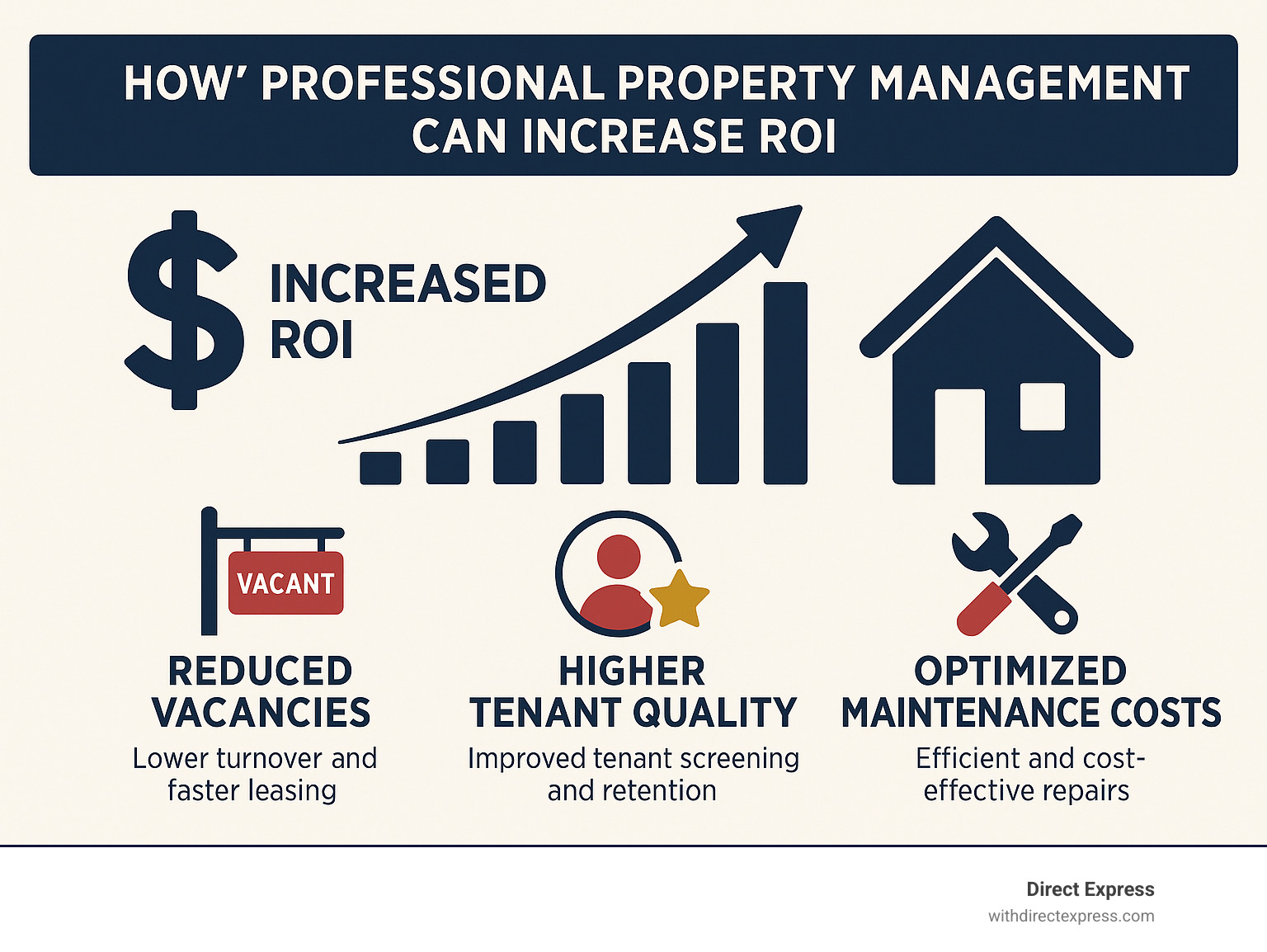
There are professional property management services in India that cater specifically to NRI clients. They handle tenant sourcing, rent collection, maintenance coordination, legal compliance, and periodic inspections.
This solves a lot of problems. But it comes with costs and its own limitations.
Management fees typically range from 8 to 12 percent of monthly rental income. ⚠️ Verify current market rate ranges with 2–3 active NRI property management firms before publishing — this figure varies significantly by city and service scope. For a property that generates modest rent, this can noticeably reduce your actual returns. Some services charge fixed monthly fees regardless of occupancy, meaning you pay even when the property sits vacant.
Quality varies significantly. Some property managers are professional and communicative. Others are difficult to reach, slow to act, and vague about how funds are being spent. Vetting a firm from abroad, without local references you trust, is genuinely difficult.
One thing worth knowing: if your property manager collects rent on your behalf as an NRI, the tenant is still legally required to deduct TDS at 30% under Section 195 of the Income Tax Act, 1961 — a property manager does not change that obligation. Any rental income should flow into your NRO account, as mandated under FEMA regulations for income earned in India by NRIs. Reference: RBI FAQ on NRI Accounts.
For agricultural land, finding professional management is harder still. Most urban property managers do not cover rural or semi-rural plots. This leaves many NRI landowners relying entirely on local farmers, neighbours, or relatives — none of whom have any formal accountability.
Technology Helps, But Only So Much
Video calls, digital document signing, online payment platforms, and satellite mapping have all made remote management easier than it was a decade ago.
You can now check your land records online through state Bhulekh portals — available for UP, Haryana, Rajasthan, Uttarakhand, and most other states — without visiting a government office. Property tax can be paid online in most major municipalities. Satellite tools like Google Earth give a rough visual check on land boundaries and current use. Some documents can be signed digitally under the Information Technology Act, 2000, which gives legal validity to electronic signatures in India. Reference: Ministry of Electronics and IT — meity.gov.in.
But technology cannot replace physical presence for anything that requires a government office appearance, a legal proceeding, or a face-to-face resolution. India’s administrative processes still rely heavily on in-person follow-up — and no app changes that reality yet.
The Emotional Cost Nobody Talks About
Managing property remotely is not just logistically hard. It is mentally draining.
The uncertainty of not knowing what is actually happening on the ground. The frustration of chasing up a caretaker who stops responding. The anxiety of getting a message that something has gone wrong and being twelve time zones away from being able to fix it.
For many NRIs, property in India becomes a source of low-level, persistent stress that rarely goes away completely. This is a real cost that does not show up in any financial model.
What Makes Remote Management More Manageable – Farmland India Explains
None of this means you should avoid owning property in India. It means you should own the right kind of property with the right kind of support structure.
Verified properties with clean legal titles require less ongoing administrative work than disputed or undocumented ones. Managed farmland programs, where a professional team handles cultivation, maintenance, and compliance, remove most of the operational burden from the owner. Platforms that offer end-to-end legal and management support, rather than just listing properties, are worth the premium for NRI buyers specifically.
The goal is to separate the investment upside from the operational complexity. That is achievable, but it requires choosing your property and your support structure carefully before you buy, not after a problem has already started.
The Honest Answer – Manage Property Remotely
Managing property remotely as an NRI is hard. Not impossible, but consistently harder than most people anticipate when they make the purchase decision.
The NRIs who do it well are the ones who planned for the management challenge from day one. They chose properties that are legally clean, they put proper representation in place, and they made peace with the fact that some level of ongoing attention will always be required.
The ones who struggle are the ones who assumed it would be passive. It rarely is.
See Also: NRI Land Investment and Family Ties: What Goes Wrong




Join The Discussion