
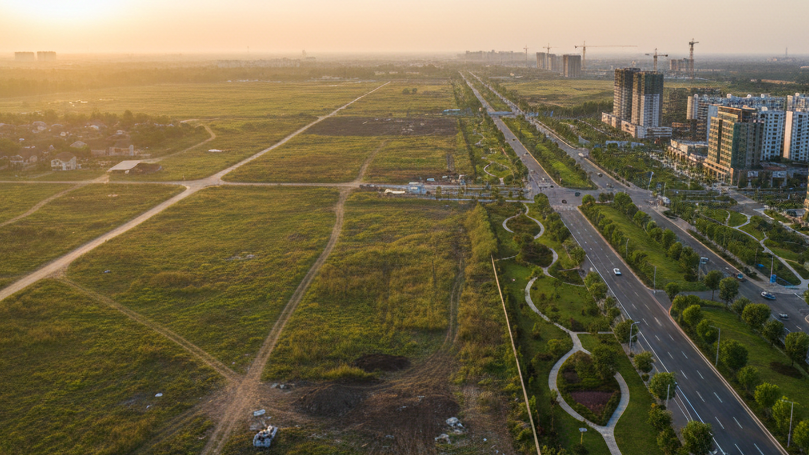
Noida International Airport in Jewar is set to become one of India’s largest and most modern airports, transforming the entire Noida-Greater Noida region into a major investment hotspot. With the airport expected to handle millions of passengers annually and spur massive infrastructure development, buying land near Noida Airport has become an attractive investment opportunity for both residential and commercial purposes.
However, purchasing land near an emerging airport zone requires careful consideration of multiple factors. From legal documentation to future development plans, from soil quality to connectivity, each aspect can significantly impact your investment returns. In this comprehensive guide, we’ll explore the 10 critical things to consider before buying land near Noida Airport to help you make an informed and profitable decision.
1. Verify Land Ownership and Legal Documentation
The most crucial among all things to consider before buying land near Noida Airport is verifying the legal status and ownership of the property. Land disputes are common in rapidly developing areas, and thorough due diligence can save you from future legal complications.
Essential Documents to Verify:
Title Deed (Sale Deed): Confirm the seller has clear ownership with an unbroken chain of title for at least 30 years.
Encumbrance Certificate: Ensure the property is free from any mortgages, liens, or legal disputes.
Mutation Records (Khata/Khasra): Verify that land records are updated in the revenue department showing current ownership.
Conversion Certificate: If purchasing agricultural land for non-agricultural purposes, ensure proper land use conversion has been obtained from authorities.
NOC from Local Authorities: Check for No Objection Certificates from Gram Panchayat, NOIDA Authority, or Yamuna Expressway Industrial Development Authority (YEIDA) as applicable.
Pro Tip: Hire a qualified property lawyer to conduct a thorough title search and verify all documentation. The small upfront cost can prevent massive losses from fraudulent sales or legal disputes.
2. Check Zoning and Land Use Regulations
Understanding zoning regulations is one of the most important things to consider before buying land near Noida Airport. The permitted land use determines what you can build and how you can develop the property, directly impacting its future value and utility.
Key Zoning Considerations:
Master Plan Classification: Check whether the land is designated as residential, commercial, industrial, or agricultural in the YEIDA or NOIDA master plan.
Floor Area Ratio (FAR): Understand the permissible FAR, which determines how much construction can be done on the plot.
Height Restrictions: Airport proximity zones may have building height restrictions to comply with aviation safety regulations.
Land Use Conversion Process: If the land requires conversion from agricultural to residential/commercial, understand the timeline, cost, and feasibility.
Green Belt and Buffer Zones: Be aware of any environmental or noise buffer zone restrictions that might limit development.
Lands classified for commercial or mixed-use development near the airport typically command higher values and appreciation potential compared to purely agricultural plots. However, conversion costs and timelines should be factored into your investment calculations.
3. Assess Connectivity and Infrastructure Development
Connectivity is paramount when evaluating things to consider before buying land near Noida Airport. The value of land increases exponentially with improved access to transportation networks, utilities, and urban amenities.
Infrastructure Factors to Evaluate:
Road Connectivity: Check proximity to major highways like Yamuna Expressway, Eastern Peripheral Expressway, and proposed Delhi-Mumbai Expressway.
Metro and Rail Links: The Noida Metro Extension and proposed rapid rail corridors will significantly enhance property values in connected areas.
Distance from Airport: Land within 5-10 km of the airport terminal typically sees maximum appreciation, while plots 15-20 km away offer more affordable entry points.
Utilities Availability: Confirm availability of water supply, electricity connections, sewage systems, and internet connectivity.
Future Development Plans: Review YEIDA’s infrastructure roadmap for planned roads, utilities, and public amenities in the area.
Investment Insight: Properties along the proposed multi-modal connectivity corridors (combining metro, road, and potentially high-speed rail) will likely experience the highest appreciation rates over the next decade.
4. Evaluate Soil Quality and Land Topography
Often overlooked but critically important among things to consider before buying land near Noida Airport is the physical quality of the land itself. Soil composition and topography directly impact construction costs, structural stability, and long-term property maintenance.
Physical Land Characteristics to Check:
• Soil Testing: Conduct geotechnical surveys to assess soil bearing capacity. Sandy-loam soils are ideal, while high clay content may require expensive foundation work.
• Water Table Level: High water tables can cause waterlogging and foundation issues. Ensure adequate drainage solutions are feasible.
• Flood Risk: Check historical flood data and elevation relative to surrounding areas. Land in flood-prone zones requires significant investment in drainage infrastructure.
• Land Slope and Leveling Requirements: Evaluate if the plot requires extensive leveling, which can add substantial development costs.
• Contamination History: Verify the land hasn’t been used for waste disposal, industrial pollution, or hazardous activities that could complicate development approvals.
The Jewar area has predominantly alluvial soil, which is generally good for construction. However, localized variations exist, making plot-specific soil testing essential before finalizing any purchase.
5. Understand Pricing Trends and Valuation
Pricing analysis is one of the most financially critical things to consider before buying land near Noida Airport. The airport announcement has already triggered significant price appreciation, making it essential to distinguish between fair market value and speculative pricing.
Pricing Evaluation Strategies:
Comparative Market Analysis: Compare prices of similar plots in the same locality, considering proximity to the airport, road frontage, and development status.
Historical Price Trends: Analyze how land prices have evolved since the airport announcement to identify areas with reasonable versus inflated pricing.
Circle Rate Verification: Check the government circle rate (minimum value for registration) to ensure you’re not overpaying relative to official valuations.
Development Timeline Impact: Plots in sectors with immediate development approval command premiums over those awaiting infrastructure or regulatory clearances.
Hidden Costs: Factor in registration fees, stamp duty, land conversion charges, and potential development fees when calculating total investment.
Market Reality Check: Land prices near Noida Airport have increased 3-5x in some pockets since the project announcement. While further appreciation is expected as the airport becomes operational, ensure current pricing reflects realistic development potential rather than pure speculation.
6. Research Developer and Seller Credibility
Among the crucial things to consider before buying land near Noida Airport is thoroughly vetting the seller or developer. The rapid development in this region has attracted both legitimate developers and unscrupulous operators.
Due Diligence on Sellers:
Developer Track Record: For plotted developments, research the developer’s previous projects, delivery timelines, and customer reviews.
RERA Registration: Ensure the project is registered under the Real Estate Regulatory Authority with all required approvals and documentation.
Financial Stability: Check the developer’s financial health through credit ratings, project delivery history, and any pending litigation.
Individual Seller Verification: For private sales, verify the seller’s identity, their rightful ownership, and the reason for selling to avoid fraudulent transactions.
Payment Structure: Be cautious of deals requiring large cash components or irregular payment arrangements that bypass official channels.
Red Flags to Avoid: Sellers unable to provide complete documentation, projects without RERA approval, developers with multiple pending legal cases, and deals with unusually low prices compared to market rates often indicate potential problems.
7. Analyze Future Development and Appreciation Potential
Investment returns depend heavily on understanding the development trajectory, making this one of the most strategic things to consider before buying land near Noida Airport. The airport will trigger multi-phase development over the next 10-20 years.
Growth Drivers to Evaluate:
Airport Expansion Phases: Noida International Airport is planned in multiple phases, with capacity increasing from 12 million to 70 million passengers annually. Each phase will catalyze development in concentric zones.
Aerotropolis Development: The planned airport city will include commercial zones, hospitality districts, logistics hubs, and residential townships, creating diverse investment opportunities.
Corporate and IT Hubs: Major corporations are expected to establish offices near the airport, driving demand for commercial real estate and residential accommodations.
Employment Generation: The airport and associated development will create hundreds of thousands of jobs, spurring demand for housing and amenities.
Tourism and Hospitality: Proximity to Agra, Mathura, and other tourist destinations will drive hotel, resort, and service apartment development.
Strategic Insight: Lands positioned along the airport-to-city connectivity corridors and in designated commercial zones are likely to appreciate fastest. However, residential zones in well-planned sectors with good amenities also offer strong long-term returns with lower volatility.
8. Consider Environmental and Noise Impact
Environmental factors are increasingly important things to consider before buying land near Noida Airport, both for regulatory compliance and quality of life considerations. Airport proximity brings economic benefits but also potential environmental challenges.
Environmental Considerations:
Noise Pollution Zones: Properties directly under flight paths or within 3-5 km of runways will experience aircraft noise. Check airport noise contour maps to assess impact levels.
Air Quality: Airports and associated traffic can affect local air quality. Evaluate prevailing wind directions and distance from major pollution sources.
Green Spaces and Buffer Zones: Check master plans for green belts, parks, and environmental buffer zones that will enhance livability.
Water Resources: Assess proximity to water bodies and potential impact of airport operations on local water quality and availability.
Environmental Clearances: Ensure the land purchase and intended development have necessary environmental approvals, especially if near ecologically sensitive areas.
For residential purposes, properties 5-10 km from the airport terminal offer optimal balance—close enough for economic benefits but far enough to minimize noise disruption. Commercial and industrial plots can be closer as noise is less of a concern.
9. Review Security and Safety Aspects
Safety and security infrastructure are essential things to consider before buying land near Noida Airport, particularly in rapidly developing areas where urban planning is still evolving.
Security Factors to Assess:
Crime Statistics: Research local crime rates and law enforcement presence in the area. Newer developments should have planned police stations and security infrastructure.
Gated Community vs. Open Plots: Gated developments offer better security but at higher prices. Open plots require individual security arrangements.
Street Lighting and Surveillance: Check for planned street lighting, CCTV coverage, and smart city infrastructure in the master plan.
Emergency Services: Verify proximity to hospitals, fire stations, and emergency response infrastructure.
Natural Disaster Preparedness: Assess earthquake vulnerability, flood management systems, and disaster response protocols for the area.
As the Noida Airport region develops, YEIDA is implementing comprehensive security and safety measures. However, plots in well-established sectors with existing infrastructure offer more immediate safety assurance than those in emerging zones.
10. Understand Financing and Tax Implications
Financial structuring and tax planning are critical things to consider before buying land near Noida Airport. The right financing strategy and tax optimization can significantly impact your overall returns on investment.
Financial Considerations:
• Loan Availability: Banks and financial institutions are generally cautious about land loans. Check eligibility criteria, interest rates (typically 2-3% higher than home loans), and loan-to-value ratios.
• Stamp Duty and Registration: Factor in stamp duty (typically 5-7% in Uttar Pradesh) and registration charges when calculating investment costs.
• Capital Gains Tax: Understand tax implications when selling. Land held for over 2 years qualifies for long-term capital gains tax at 20% with indexation benefits.
• Property Tax: Check annual property tax obligations based on land use classification and location.
• Development Charges: Budget for potential infrastructure development charges, external development charges (EDC), and license fees imposed by authorities.
Tax Planning Tip: If purchasing land for commercial development, structuring the investment through a company or LLP may provide better tax optimization and easier exit options. Consult a chartered accountant for personalized tax planning based on your investment goals and holding period.
Making Your Land Purchase Decision Near Noida Airport
After evaluating all these things to consider before buying land near Noida Airport, the decision should align with your investment objectives, risk tolerance, and time horizon. Here’s how to approach the final decision:
Short-Term Investment (2-5 Years)
Focus on plots in sectors with immediate development approvals, good connectivity, and near-term infrastructure delivery. Lands closest to the airport in approved commercial zones typically see fastest appreciation but come at premium prices.
Medium-Term Investment (5-10 Years)
Consider plots in Phase 2 development sectors along planned metro corridors and major road expansions. These areas offer balanced pricing with strong appreciation potential as infrastructure materializes.
Long-Term Investment (10+ Years)
Larger land parcels in emerging sectors offer best value. While appreciation may be slower initially, the compounding effect over decades and potential for higher FAR development in future master plan revisions can generate superior returns.
Conclusion: Things to Consider Before Buying Land Near Noida Airport
The Noida International Airport represents a once-in-a-generation infrastructure development that will transform the NCR region over the coming decades. By carefully evaluating these 10 things to consider before buying land near Noida Airport—from legal documentation and zoning to connectivity, pricing, and environmental factors—you can make informed decisions that maximize your investment potential.
The key to successful land investment in this region is patience, thorough due diligence, and realistic expectations. While the airport will undoubtedly drive substantial appreciation, the timeline and magnitude will vary significantly based on specific location, infrastructure development pace, and broader economic conditions.
Remember that buying land is a long-term commitment requiring significant capital and holding capacity. Unlike ready-to-move properties, land investments don’t generate immediate rental income and require patience to realize appreciation. However, for investors with appropriate time horizons and financial capacity, land near Noida Airport offers compelling opportunities to participate in India’s infrastructure growth story.
Before finalizing any purchase, engage qualified professionals—lawyers for legal verification, property consultants for market analysis, and financial advisors for tax planning. The relatively small professional fees are worthwhile investments that can save you from costly mistakes and ensure your land purchase near Noida Airport becomes a profitable long-term asset.
Frequently Asked Questions
Is buying land near Noida Airport a good investment in 2026?
Yes, land near Noida Airport remains a strong investment opportunity in 2026. While prices have appreciated since the initial announcement, the airport is still under construction with operations expected to begin in 2024-2025. The real estate appreciation typically continues for 5-10 years after an airport becomes operational as surrounding infrastructure develops. However, careful selection based on the 10 things to consider before buying land near Noida Airport is essential to avoid overpriced or problematic plots.
What is the minimum budget required to buy land near Noida Airport?
The budget varies significantly based on location and land classification. Plots in developed sectors close to the airport may cost ₹15,000-30,000 per square meter, while lands in emerging areas 15-20 km away can be found for ₹3,000-8,000 per square meter. For a standard residential plot of 100-150 square meters, budget ₹5-20 lakhs in outer zones and ₹20-50 lakhs in prime locations, plus additional costs for registration, taxes, and potential development charges.
Which sectors near Noida Airport are best for investment?
Sectors along the Yamuna Expressway, Greater Noida West (Noida Extension), and YEIDA-developed sectors near Jewar offer strong investment potential. Specifically, sectors with existing or planned metro connectivity, proximity to the Eastern Peripheral Expressway, and master plan approval for commercial development tend to appreciate faster. Consult local property experts for current recommendations as development priorities evolve.
How long should I hold land near Noida Airport for optimal returns?
For optimal returns, plan to hold land for at least 5-7 years, ideally 10+ years. This timeframe allows infrastructure development to materialize, the airport to become operational, and surrounding commercial and residential projects to establish. Land investments appreciate gradually as development unfolds, unlike ready properties that can generate immediate rental yields. Short-term holdings may coincide with market corrections or slow development phases.
What are the risks of buying agricultural land near Noida Airport?
Agricultural land carries several risks: it requires conversion to residential/commercial use (which may be denied or delayed), has lower resale liquidity, may have restrictions on sale to non-agriculturists, and offers limited financing options. Additionally, agricultural land typically cannot be used for construction until converted, limiting immediate development or monetization options. Always verify conversion feasibility and factor in conversion costs and timelines before purchasing agricultural plots.
Can NRIs buy land near Noida Airport?
Yes, Non-Resident Indians (NRIs) can buy residential and commercial land in India, including near Noida Airport, without requiring special permissions under the Foreign Exchange Management Act (FEMA). However, NRIs cannot purchase agricultural land, plantation property, or farmhouses. NRI buyers should ensure funds are remitted through proper banking channels, maintain FEMA compliance for repatriation of sale proceeds, and consult tax advisors regarding Indian income tax and tax implications in their country of residence.

Join The Discussion