

- Introduction: Agricultural Land in a Changing Era
- Agricultural Land Use: 2025–2026 Trends & Transformations
- Key Trends Shaping Agricultural Land Use
- Precision Farming, Satellite Imaging & Sustainable Practices
- Agricultural Land Price: Factors & Dynamics in 2026
- Major Determinants of Agricultural Land Price
- Comparative Trends Table: Agricultural Land Use and Pricing (2025–2026)
- Buy Agricultural Land: Considerations and Opportunities
- Essential Tips When Buying Agricultural Land
- Agricultural Land on Rent & Leasing: The New Dynamics
- 2026 Rental & Leasing Trends
- Advantages & Watch-outs for Tenants
- Cost of Agricultural Land: Implications for Farmers & Communities
- Key Socio-Economic Dynamics
- FAQ – Agricultural Land Use, Pricing & Leasing (2025–2026)
- Key Takeaways
Introduction: Agricultural Land in a Changing Era
For decades, agricultural land in India has been seen as “safe property.” Families buy it to farm, hold it for future generations, or simply as a long-term investment. Unlike stocks or gold, land does not disappear, and food demand never stops.
In 2026, India’s economy (GDP) is expected to continue growing steadily. When GDP grows, people earn more, businesses expand, infrastructure improves, and demand for food increases. All of this directly impacts farming and farmland value. This is why agricultural land prices affected by GDP growth have become an important topic for farmers, buyers, and investors.
Simply put: when the country grows economically, productive land becomes more valuable.
Agricultural Land Use: 2025–2026 Trends & Transformations
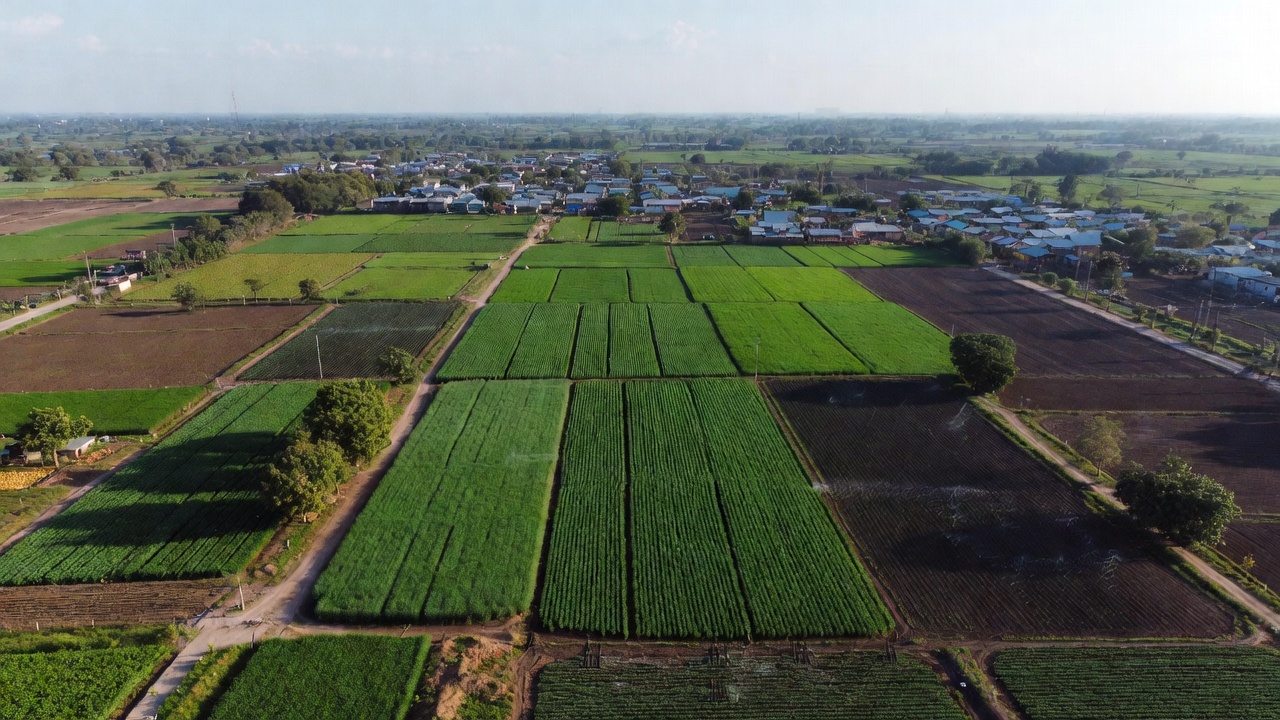
Between 2025 and 2026, the way agricultural land is used in India is clearly changing.
Earlier, most land was used for basic crops like rice and wheat. Today, many farmers are shifting to higher-income crops such as vegetables, fruits, pulses, spices, and flowers. For example, a farmer in Maharashtra growing grapes or pomegranates earns much more per acre than traditional crops. This makes such land more valuable.
Another big change is better rural infrastructure. New roads, cold storage facilities, irrigation projects, and food processing units are reaching villages faster than before. When a village gets better connectivity, nearby farmland prices often rise by 10–20% within a few years, especially near highways or agri-hubs.
Key Trends Shaping Agricultural Land Use

One major trend is commercial farming. Many individuals and companies now lease or buy land to grow crops at scale. This increases competition for good-quality farmland.
Another trend is sustainable farming. Land suitable for organic farming or water-efficient crops is in high demand. With rising health awareness, organic produce prices are higher, making such land more profitable.
Migration also plays a role. While some people leave villages for cities, others return to farming as agri-entrepreneurs. This mix keeps land demand strong. As GDP growth supports rural incomes, agricultural land prices affected by GDP trends remain stable or rising rather than falling.
Precision Farming, Satellite Imaging & Sustainable Practices

Technology is no longer limited to big farms. In 2026, even small farmers use mobile apps to check weather, soil health, and market prices. Drones and satellite images help monitor crops and reduce losses.
For example, precision irrigation can reduce water usage by 30–40% while improving yields. Land that supports such modern farming naturally becomes more valuable.
Sustainable practices like crop rotation and organic farming also protect soil quality. Buyers today prefer land that can produce good yields for decades, not just a few seasons. GDP growth supports these technologies through subsidies, loans, and private investment.
Agricultural Land Price: Factors & Dynamics in 2026

Agricultural land prices do not rise randomly. In 2026, several clear factors drive pricing.
First is income growth. When GDP rises, farmer incomes improve, allowing them to buy or upgrade land. Second is food demand. India’s population continues to grow, and food consumption rises with income.
Third is limited supply. India’s cultivable land is not increasing, but demand is. This mismatch pushes prices upward slowly but steadily. This explains why agricultural land prices affected by GDP growth rarely crash and usually appreciate over time.
Major Determinants of Agricultural Land Price
Location matters the most. Land near highways, mandis, food parks, or irrigation canals sells at a premium. For example, farmland near a national highway can cost 2–3 times more than similar land just 10 km away.
Water availability is another key factor. Land with borewells, canals, or rivers nearby is always in demand. Soil quality also affects pricing, black soil areas in central India are valued for cotton and soybean farming.
Government support plays a role too. States offering better MSP, subsidies, and crop insurance often see stronger land demand.
Comparative Trends Table: Agricultural Land Use and Pricing (2025–2026)
| Factor | 2025 | 2026 |
| Crop diversity | Moderate | High |
| Technology use | Limited | Common |
| Land prices | Gradual rise | Faster appreciation |
| Leasing demand | Medium | High |
| GDP impact | Indirect | Direct |
This table shows how economic growth is directly shaping land use and pricing.
Buy Agricultural Land: Considerations and Opportunities

Buying agricultural land in 2026 can be a smart decision if done carefully. Many buyers now look beyond traditional farming states and explore emerging regions with irrigation and road projects.
For example, land prices in developing agri-belts may be lower today but can rise significantly over 5–10 years. GDP growth improves infrastructure and market access, increasing land value over time.
However, buyers should always think long-term. Agricultural land is not for quick profits, it rewards patience.
Essential Tips When Buying Agricultural Land

Always check legal documents such as title deed, land records, and local zoning rules. In India, agricultural land laws vary by state, and mistakes can be costly.
Also, understand the land’s earning potential. Can it be leased? Is water available year-round? Knowing how agricultural land prices are affected by GDP and development trends helps buyers choose better locations.
Agricultural Land on Rent & Leasing: The New Dynamics
Leasing agricultural land is growing fast. Many landowners prefer renting out land instead of farming themselves. At the same time, young farmers and agri-companies prefer leasing to avoid high purchase costs.
In some states, farmland rental rates have increased by 15–25% over the last few years, especially in high-productivity regions. GDP growth encourages organized farming, which increases leasing demand.
2026 Rental & Leasing Trends

In 2026, leasing is expected to grow further. Regions with fruit farming, dairy, and organic produce see the highest rental demand.
Better cold storage, transport, and export facilities allow tenants to earn more, which supports higher rents. For landowners, leasing offers steady annual income without farming risks.
Advantages & Watch-outs for Tenants
Leasing allows farmers to start or expand farming with low investment. It offers flexibility and reduces financial pressure.
However, tenants should be careful about lease duration, rent terms, and legal agreements. Short or informal leases can create uncertainty.
Cost of Agricultural Land: Implications for Farmers & Communities
Rising land prices benefit landowners but can be challenging for small farmers. Higher prices make it harder for new farmers to buy land.
At the same time, increased land value improves rural wealth, boosts borrowing capacity, and supports local businesses. GDP growth strengthens these effects, creating both opportunities and challenges.
Key Socio-Economic Dynamics

As India’s economy grows, food demand rises, exports expand, and agriculture becomes more business-driven. Land becomes both a productive and financial asset.
Balancing affordability for farmers with growth-driven appreciation remains important for sustainable development.
FAQ – Agricultural Land Use, Pricing & Leasing (2025–2026)
How are agricultural land prices affected by GDP growth?
When GDP grows, incomes, infrastructure, and food demand increase, pushing land prices upward.
Is agricultural land a safe investment in 2026?
Yes, especially in productive regions with good water access and connectivity.
Is leasing better than buying land?
Leasing is good for short-term farming. Buying suits long-term wealth creation.
Which areas may see the highest price rise?
Regions with irrigation projects, highways, and high-value crops.
Key Takeaways
- GDP growth directly supports higher agricultural land demand
- Technology and sustainability increase land value
- Leasing is becoming popular for steady income
Understanding how agricultural land prices are affected by GDP helps make smarter decisions



Join The Discussion